Monday, November 30, 2009

Carrie's Visit to Zamora

Carrie´s Visit to Zamora


Altogether, there are sixteen of us volunteer retired teachers and we´ve been posted to ´bi-lingual´village schools all over the Northern province of Castile and Leon . The schools are near the historic cities of Spain´s largest province: Burgos: Valladolid, Avila, Soria, Segovia, Palencia, Leon, Salamanca and Zamora. I really enjoyed the weekend when Carrie stayed with me in Zamora. She´s a Canadian with a warm personality and an interesting background, staying in Salamanca, only an hour by bus from Zamora.


We were blessed with a fine Sunday morning for a walk by the River Duero. In the background, the ´romanico´Puente de la Piedra´


By yet another of the coincidences that have happened since I arrrived in Spain, Carrie´s 'host' English teacher , Belen, has a connection with me. We´d never met, but we´ve exchanged homes.


For some years Roy and I did home-swaps via an Internet company, and once went to stay in Salamanca for a week. By chance, she saw my name on an email I sent to Carrie and said ´I know that person´.


So she proposed coming to collect Carrie to drive her back on Sunday and I reserved a table for us at one of the restaurants that Olga recommended. It was ´Sancho 2´, is in a small park in Zamora. The food and company were excellent.

Wednesday, November 25, 2009

Concert For St Cecilia It`s too complicated for me to tell you where the conservatory is`, said music teacher Lidia. 'I will drive you there.' I was glad of this, as although I was keen to attend the students' concert, the temperature in Zamora had suddenly dropped. It was a foggy 1 degree in the morning and never rose above 5 that day.

Fortunately, Lidia´s flat is across the street from mine, which makes it convenient for her to drive me to Corrales three times a week. Her duties take her to other villages on Tuesdays and Thursdays.

Lidia plays the violincello, as it´s called here. Last week she took the 'cello to the school. The children were still enthusiastic following the visit to a special concert in Vallalodid, so she wanted them to see the 'cello close up. She was feeling nervous about it, though. ´Did they damage it?´I asked her on the way home. No, she said, but she´d misjudged the width of a doorway and managed to break a string all by herself!


The music conservatory in Zamora is housed in what was once an orphanage, and I suppose the concert hall must have been the chapel. It was certainly well supplied with the gilded grotto-like structures called 'retablos'.


This concert had just the kind of informal atmosphere I enjoy, with a good turn-out of relatives, and all the pieces were short, so no strain on the attention. Naturally, guitars featured prominently, fifteen all at once for once piece. fMy favourite was the Villa Lobos solo, though, and I was moved to tears by the concentration of the fourteen year old performer.

Even though I was driven there and back I wore my red coat for the first time. It´s milder now, and I´m back to my padded vest, or flak jacket as Roy calls it. So my musical education continues.

Tuesday, November 17, 2009

Ready to Fly: Storks in Zamora


It´s not unusual to see storks in the centre of Zamora. I could hardly believe it, all the same, when I first saw one pass overhead. It was warm enough, then, to sit in the Plaza Mayor and drink gin-tonic, Spanish size.

Sweeping over distant rooftops with legs and necks outstretched they circle like low-flying aircraft, then suddenly appear overhead, casting a shadow. The separated black wing feathers are clearly visible.

Yesterday they were unusually numerous, seven or eight circling all at once. Even the locals stood with faces upturned as I made my way to the library at 6pm. The birds not on the wing were perched on nests around the Plaza Mayor , or standing on chimneys, looking as if they might launch themselves any minute.


When I left the library an hour later it was dark and there was heaviest rainfall I´ve ever seen here . When I mentioned the birds´ unusual behaviour to Olga this morning she suggested they were getting ready to fly South. Like me, they know it´s almost time to go, but they´re savouring their final days in Zamora.
Hasta Luego

I thought Roy would miss his cronies, not to mention his bridge games, if he stayed too long in Zamora. So I suggested two visits instead of one; stay a week, return to London for two and join me for the final ten days. I even managed to book us on the same return flight.

On Sunday, though, when was in the kitchen consulting the Madrid Metro map, two weeks alone seemed a long stretch. And it meant four journeys for him instead of two.


Going by his postcards, what Roy most liked about Zamora was the food and drink. On every card he mentioned a three-course ‘menu del dia’ at 8 Euros, including half a bottle of wine. I joined him on his exploration of the town on two days but the rest of the time I was in school. My favourite time was a stroll by the lovely River Duero on his first day here.

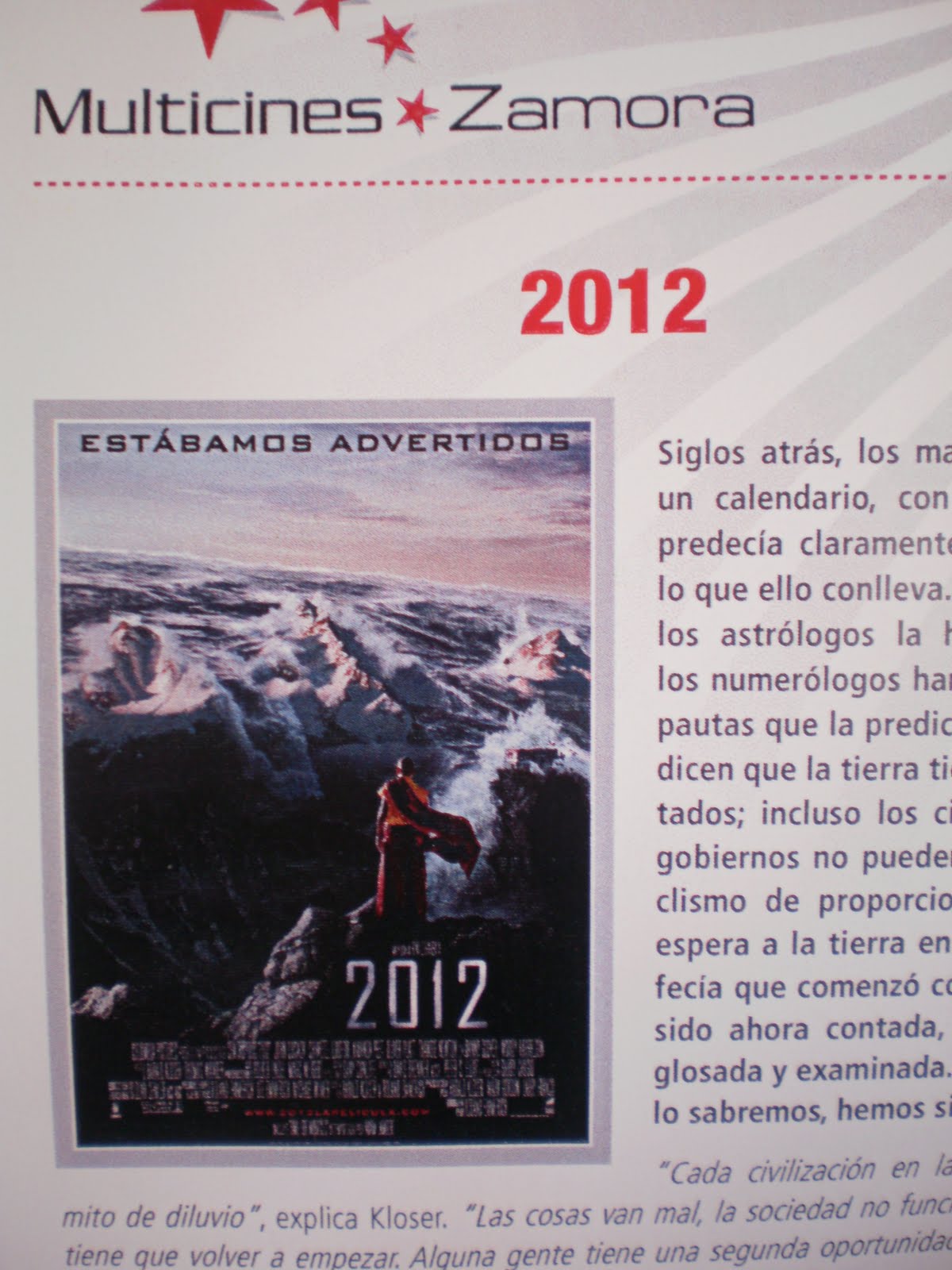
It was almost like being back home when we visited the Zamora´Multicine´- excpet that all the films are dubbed into Spanish. As the one we saw was ´2012´, it didn´t really matter. It would have been bottom of my list in London, and even here all the mayhem palled after the first hour, but we enjoyed it.

I don´t think Roy was at all interested in going to the circus, but I caught this shot of him him standing next to poster. I have to be sneaky because he thinks I´m a pest with my camera.


For me it´s eyes down for a final three weeks, but the last two will be lightened by his return. Then, when we get back to London, I´ll make reparations by being a top-notch stay-at-home wife.


Tuesday, November 10, 2009

Fruits of the Earth


‘Old people can make ink from those –what do you call them?’ Jose Eladio the headmaster pointed to some strange-looking fungus growing under a tree. In front of the school, one or two trees of the pine variety are confined to square patches of earth. Spindly toadstools with frilly black edges had sprung up beside them.

The growth and harvesting of plants is something I’d been aware of in China, where Í´d watched farmers on the hillside opposite my flat. This had been forgotten in London, near a market supplying exotic fruit and veg from across the world and a supermarket full of canned and frozen goods. I was reminded, now, that plants are also a source of dyes and inks.

‘This time of year they also gather the kind you can eat’, said Jose Eladio. He added that the local people went out to collect them when certain weather conditions prevailed, such as showers followed by sun, to sell later. ‘Twelve Euros a kilo. It’s money for free!’


Next day a notice outside an upmarket restaurant in the historic centre advertised a week of speciality mushroom-based menus.


On Friday I took part in a harvest myself, ‘Come, Sheila’, Jose Eladio announced at break time. ‘We’re going to take the olives from the school tree.’

Some days before I´d been given a tour of an area the size and shape of a city allotment, not at its best in early November. Three large cabbages grew in an otherwise bare middle part. Some rosemary and other hardy herbs and thin trees grew around the perimeter. Conditions here don’t encourage luxuriant growth.


Between the silver and light green leaves of the olive tree, though, shiny oval black berries were clearly visible. A single pupil-volunteer held a plastic bag and helped the teachers pick, whilst his classmates played football. Here’s a young horticulturist-in-the making, perhaps.
The tree wasn’t big, and Jose Eladio could reach the highest berries.
I love olives, so I tasted one I´d picked. I immediately hurriedly spat it out; it was horribly bitter. The science teacher explained they’d need several days of soaking and changes of water to make them edible.

They’re now on the draining board in the staffroom, a timely reminder for a Londoner that olives don´t just come from tins and jars.

Friday, November 06, 2009

School Dinners

Here in Corrales the children are full of beans –literally. Today's treat is a Paella starter, with fish to follow, but I bet we'll see some beans tomorrow.


Lunch has three courses: a vegetable starter, which may be soup, green beans cooked with ham pieces or white beans with bits of chorizo, then almost always baked fish and lettuce, occasionally chicken or veal and lettuce, and bread. To finish, there’s fruit or yogurt.

The staff who eat at school, including me, have the same food. The children staying for lunch, who remain at school for afternoon activities, eat in a dining room. I usually go with Olga or another teacher to collect the teachers share from the kitchen. It comes back to the staffroom on a trolley.

Lunch is the time when I get to practise speaking Spanish, when I can get a word in, but there are usually no more than four of us. I still can’t understand much of what’s being said, except in a very general way. Teachers take it in turns to stay on each day and supervise the afternoon sessions.
Enough fuss has been made about English school dinners. Here it's more as I remember it back in the old days - except with more beans.

Thursday, October 29, 2009

Have you heard the Angels singing?


Have you heard the Angels singing?

Lydia the music teacher tipped me off when she drove me to the village school in Corrales: sung music by Vivaldi and Purcell at the cathedral - by a group from London! She couldn’t attend herself. ‘It’s free, so arrive early to get a good seat’, she said.

It was the first time I’d seen the cathedral at night. The impressive dome dominated the skyline, and the interior was a vision of gilded splendour. On a previous visit I’d just wandered round a series of ante rooms, gawping at tapestries of the Siege of Troy, a massive Semana Santa procession platform, elaborately decorated silverware and paintings.

I needn’t have worried about a central position. The sponsors, Caja España, had provided monitor screens so the singers and players could be viewed in close-up – especially when the camera dwelt on a lively blonde first violinist and a handsome countertenor.

The strangest thing, for me, was the bars between the audience and performers – not light, decorative wrought iron, but heavy-duty ones that obscured the view. Some VIPs were allowed on the orchestra side.


While I waited I looked at the programme, with its alluring question on the cover: 'Have you heard the Angels sing?'. Inside was summary in Spanish of the lives of Purcell and Vivaldi, and the words in Spanish and English to the five settings of psalms by Purcell and then a Latin text for the Vivaldi ‘Dixit ….’ There was a short ‘sonata de trompeta’ between Purcell psalms. It was a hollow-sounding instrument of a dull copper colour, like an over-sized Victorian child’s toy.

The line-up for the moving Purcell psalms was a soprano, two counter-tenors and a tall baritone, with the occasional accompaniment from other singers. If there was one fault with the programme it didn’t have photos identifying individual performers, although Peter Pickett the conductor and founder of The New London Consort group was obvious. The concert was the first of four in cathedrals in Zamora, Valladolid, Leon and Palencia.

They saved the best ‘til last, and the Vivaldi, with everyone singing and playing together, was uplifting. Amid the applause that echoed round the roof, did I feel a hint of national pride? Or was it the angels singing?

Tuesday, October 27, 2009

Playing up agains so I can't upload photos. Will have to wait until tomorrow, which is what worked last time.

Monday, October 26, 2009

I can’t get no calefacción…


I’d been looking forward to Saturday 24th, the day the heating was to come on. Yesterday was a mild 14° but mornings are a bit chilly and one day last week it reached only 8°, even at mid-day.

The notice in the hallway was dated 2008, but José Eladio assured me it was because it was the same date every year.

I was surprised, then, when the radiators were hot on Friday 23rd, when I arrived home from school. Not for long and not all of them – the bedroom and hall ones remained cold and the knob to make them hotter was stuck. Best not force them, I thought, after my disaster with the ‘persiana’ last week: I tugged the cord too hard and the blind disappeared into the box over the window.

The heat must be on a trial run, in case adjustments were needed.

Then the same thing happened on the 24th. The radiators had been on for an hour when I left the flat at one and were cold when I got back at seven. Today they haven’t come on at all. There’s obviously someone at the remote control, working to a bonus.

José Eladio and Olga have been so kind to me I don’t want to raise a further problem. They went out of their way to help when I arrived – Olga offering a room in her lovely flat, with my own bathroom, at such short notice, and José Eladio ringing agencies trying to find a place within the Vaughantown budget. In the end he resorted to friends and relations. He even drove me round to view and it wasn’t his fault the first one was too big.

When I expressed my thanks he said, ‘It’s normal’.

Are all Spaniards so kind and helpful? I think maybe they are. ‘It’s the weather’, says Olga.

Saturday, October 24, 2009

Chance Encounter

I don’t believe in coincidences as a rule, but what happened last Sunday made me wonder.

I was attracted by the title of a book in the window of an upmarket souvenir shop: ‘Un sueño de Barro and Piedra’. The cover had a reproduction of a painting of a road leading into a village of red-roofed houses.

In the store, a woman was bustling among cheeses and wine and figurines. The book stood on a rack of photo guides to Zamora. I thought I’d better make sure I could read it, with some help from a dictionary.


It was a collection of short essays by Herminio Ramos Perez, born in a nearby village in 1925. An introduction described his career after his move to Zamora, where he became a respected teacher, writer and expert on ceramics and local history. He was elected as a councillor, and nicknamed ‘El Maestro’. An informer who reported his left-wing views to the school authorities cost him his job in the 70s, a serious setback because he had eight children.

At 6.5 Euros, with excellent line drawings of Zamora’s main buildings by the cover artist, it seemed a bargain. The shop-owner finished a phone call as I browsed among postcards and some boxes of biscuits baked by nuns in a local convent.

It was as I turned to leave that the owner became excited, calling out, ‘Eh! El Maestro! El Maestro!’ She pointed to a little old man in a suit, who was making his way slowly down the street, hesitating with each step and feeling the ground with a walking stick. I saw he resembled a small statue I’d seen someone drawing. I soon caught him up.


Somehow inspired, I stuttered in Spanish that I was a volunteer teacher. Would he sign the book I’d just bought? I could understand some of his reply. Corrales was near his own village, he said, and even told me how many hectares had been under wine cultivation in the past. He was sad to hear there are now only 57 children in the village school. He apologised for his poor eyesight and insisted on returning to the shop, where the owner’s son helped him up the step. He wrote a shaky inscription in the book.


After I told Olga about it next day, I could just about make out what she muttered in Spanish to a colleague: ‘Huh! How come I never met Hemingway in the street when leaving a bookshop in England?’

Wednesday, October 21, 2009


Medieval Market

‘Don’t forget to go to the medieval market, said Olga. She was off to spend the weekend with friends in Galicia. It seems to be the vacation place of choice for Zamorans; it has a seaside.


It’s not surprising that Zamora, a town with so many twelfth century buildings, should celebrate the past, certainly there seem to be a lot of institutions dedicated to the study of ancient times. However, I was told this is the first ‘medieval market’. ‘People will be wearing disguises’ said Jose Eladio. Masquerades are a local enthusiasm, and he has his own costume for the Semana Santa procession. It's claimed to be the best in Sapin, and not only by Zamorans

The streets certainly looked the part - decked with banners and lined with stalls covered in brown material, I must say, seemed kitch, especially stalls selling jewellery and whimsical ceramics. A stall with Breton crépes and a man draped with a python seemed bizarre additions.

. However, the entertainments were good, with pipe and drum music to create an appropriate festive mood. Musicians accompanied a ‘dancing bear’ (a man in a costume) and a hawking demonstration where an eagle swooped from a tent canopy to a knight with a gauntlet.


‘Artisans’ were engaged in engaged in medieval trades, such as stone carving and embossing metal dishes using a hammer and nails, and there was a display of medieval stocks and instruments of torture with gruesome descriptions.


There were even games for children, such as this one where the aim was to raise a wooden disk by pulling ropes and not letting it slip through the holes.

The main attraction was an awning where people sat at tables and ate from wooden platters. Beside the spit with the roasting pig, an octopus was stewing in a vat, its tentacles breaking the surface of the reddish water. Smoke and the smell of roast pork filled the air. From a rectangle of counters, waiters in costumes served beer and food. Occasionally a server would shout ‘pulpo’ and chop fiercely at a tentacle cut from the mass. I ate a portion served on potatoes, accompanied by a caña of beer. Nothing medieval about the price, though -15 Euros.

Tuesday, October 20, 2009

There seems to be something wrong and I can't load photos because the upload box isn't appearing. I'll try tomorrow to write about the Medieval Market. A bit of a nuisance as I came on purpose to the library. I hope the problem's only temporary. Maybe I'll put the photos on picasa.

Monday, October 19, 2009

School Trip to a Sewage Works


‘Sheila, I have something to tell you. Friday a coach comes to the school and we all get on. Then we go for –what do you call that?

‘A school trip?’

Jose Eladro, as always, looks pleased to learn a new English expression.

It’s Wednesday, my first day at Collegio Luis Casado , and I’m to have Thursday off thanks to some exchange that hasn’t been organised. So it’s been a one-day week.

‘Oh, that’s good.Where are we going?’

‘We visit a place where residual water is made cleaner’

What a coincidence. Only last week we said farewell to our temporary lodger, Stan, water treatment engineer whose new job had been confirmed. He said one of the company’s works was in Castile-y-Leon.

It was a bit noisy on the coach. ‘Corrales is a ‘shouty’ village said Lydia, who’s been teaching four years.

‘It’s the weather!’ said Olga

The presentation is too technical for me, so I’m impressed by how attentive the children are.

The children shout with horror when we enter the indoor part of the plant, and come out again holding their noses. ‘It’s whiffy.’, laughs Olga. It’s another word I taught her when I heard the Spanish pronunciation of ‘Wifi’.


After, we go to a church in the town of Benavente, which is much more interesting – twelfth century, elaborate gilded set pieces inside. I tell Olga that they remind me of the Byzantium exhibition I saw in London, but she surprises me when she tells me she prefers plain churches. Where does she find them? Not in Zamora, that’s for sure.


Friday, October 16, 2009

A Place of my Own


Tonight, at last, I'll unpack my suitcase.

Yesterday Jose Eladro, who 's unlike any headmaster I've ever met, took me to look at two flats in Zamora. The first, above a parade of shops near the station, was big, dark and dusty. I could soon become very depressed there, so I turned it down. That was a pity, because Jose Eladro's brother-in-law was the owner.

The second place, on the sixth floor near the river, overlooked a football pitch. There was only one bedroom, but a sofa bed in the living room should be OK for guests. It's not so near the historic centre, like Parador Olga, as I call the teacher's flat where I'm staying. But a stroll along the banks of the beautiful River Duermo will take me there in ten minutes. Alternatively, a walk down Santa Clara, the main street of the new town centre, leads to the old Plaza Mayor at the end.


The owner is an old colleague of Olga's. As Spaniards like to live near where they were born, there's an inevitable connection in small towns and cities.

I only realised this morning that I'd been so taken with the floor-to-ceiling window in the kitchen and the light, I hadn't even noticed whether there was a table in another room. The kitchen has only a breakfast bar, and I hope to do lots of writing in the flat, located in a street called Puerto Novo. 'A new door' said Olga, which sounds very auspicious

Thursday, October 15, 2009

Our Reception at Vallalodid


The room for the official reception at Vallalodid reminded me of the Painted Dining Hall at Greenwich Naval College. It was smaller and older - the tenth-century building had played various roles, including serving as a monastry and, much later, a twentieth century psychiatric unit. On Tuesday the Minister for Education in Castile-Leon greeted us volunteers for the 'bilingual schools' project.

We were fourteen - more or less. One at least was still tracking down luggage left in Atlanta, and I'm not sure everybody caught the early train from Madrid. On my left in this photo(I'm in the middle smiling at the camera) is the only other volunteer from England -we'd travelled together by metro to Madrid railway station - although there's a Scottish lady in there somewhere. The others are retired teachers from America, Canada and Australia. We met for the first time at a tapas reception the previous night in Madrid.

At the same reception I'd met Richard Vaughan, the founder of Vaughantown systems, a company which brings native English speakers to Spain. It was under their aegis that I'd done a week's volunteering in Extramadura in September 2008.


What a contrast between the grandiose ceremonials and my actual workplace. We've been assigned to small towns and village all over the Castile-Leon region, and this is the playground of Luis Casado primary school -57 pupils and 8 teachers - in Corrales del Vino, (pop. 1,000) a few miles from the ancient capital, Zamora. Lucky for me, the teachers live in the city and drive out to the school.

Wednesday, October 07, 2009

Autre Pays...


'You've done what with the tram ticket?'


My son goes into the usual exasperated laugh and eye-rolling that's his stock response to much that I do.


I, meantime, am standing with said ticket, now black on the underside, in one hand. In the other dangles a tea-towel bearing a blurred black rectangle the exact size of the ticket.


'I told you not to do it!' He throws his hands up and pivots, eyes on the ceiling.


We are staying at D's flat in Brussels, where he's come to work in some vast financial corporation. As it's Friday he'd gone off on the tram to work, and I'd tidied up a bit. About half past ten he rang to ask if I'd found the ticket on the table:


'In case you want to go into the city. It has some credits and you feed it into a slot on the tram when you get on.'


Seemed reasonable, but where's the ticket? Ah, yes, there it is, all crumpled in the waste bin.


Instead of going into the city R and I spend the day recovering from Euro-lag - drinking coffee in the market square and being persuaded to spend £20 on 3 kilos of mussels which the stall-holder assured me would be barely enough for three people. Another mistake, going by the reaction when I told D over the phone. I was spared the eye-rolling on that one.


He more than made up for it when I showed him the bent ticket at the flat.


'Oh, you've buggered it, now. See what it says on the bottom - 'Ne pliez pas, SVP'?


'Never mind, I can iron it!'


Even R joins in the remonstrations on that one. 'Don't do that. I've got all the details and one or two others to return - they give out refunds. '


So I waited until their backs were turned and did the deed - resulting in the back of the ticket being transferred to the towel.


'What a scam! I bet they make a lot of money that way!'


So I'm glad to get back to London with my Freedom Pass and the trusty Oyster-swipe system.