Tuesday, September 17, 2013

The Quiet Charms of Santander


'Reassuringly urban', was my husband's response to the city where I chose to celebrate my birthday.  I wanted to stay in a more authentic Spanish city than the usual magnets for foreign tourists and I guessed I'd have a better chance to put my language studies into practice.

I'd spent my 50th birthday in  Australia, and my 60th in China. I was working abroad both times, and money wasn't really a consideration, but ten years on it was.

When I came back I was  invited to write a 300 page review of my stay, in return  for a $20 discount on my next holiday booked with CheapO air.  There was no pressure to write a 'positive' review but  in fact there wasn't much to complain of.

Here it is, with added photos, as they weren't required for the review:

The Quiet Charms of Santander

Santander, on Spain’s ‘Costa Verde’, is not a place that flaunts its charms. Be warned, you’ll need to speak and understand some Spanish; you won't find bars offering an all-day 'full English’ . Sit in one of the many  bodegas, enjoy a tasty pincho with a glass of wine or ‘chocolate y churros’ and watch  the people pass  by. A surprising number  are elderly couples, hand in hand.


Collect a map from one of the rival tourist offices near the covered Mercado de L'Este,  one of the few places  where they do speak English .
 
While you discover the variety and interest of a modest Spanish city on foot, be sure to take a tip from the locals and carry an umbrella.


On sunny days, take one of the cheap and frequent buses to the beaches at Magdalena or El Sardinero  for a walk along the beaches.

 
There's a highly enjoyable collection of paintings and mixed-media installations at the free Museum of Modern Art,

and a well- preserved bullring at the Plaza de Toros. 


Ferries from Portsmouth dock at Portocchio, and you can stroll along the marina to the Maritime Museum and the area around the Palace Theatre.

 
Squares and statues give a sense of the city's  history.
 
 
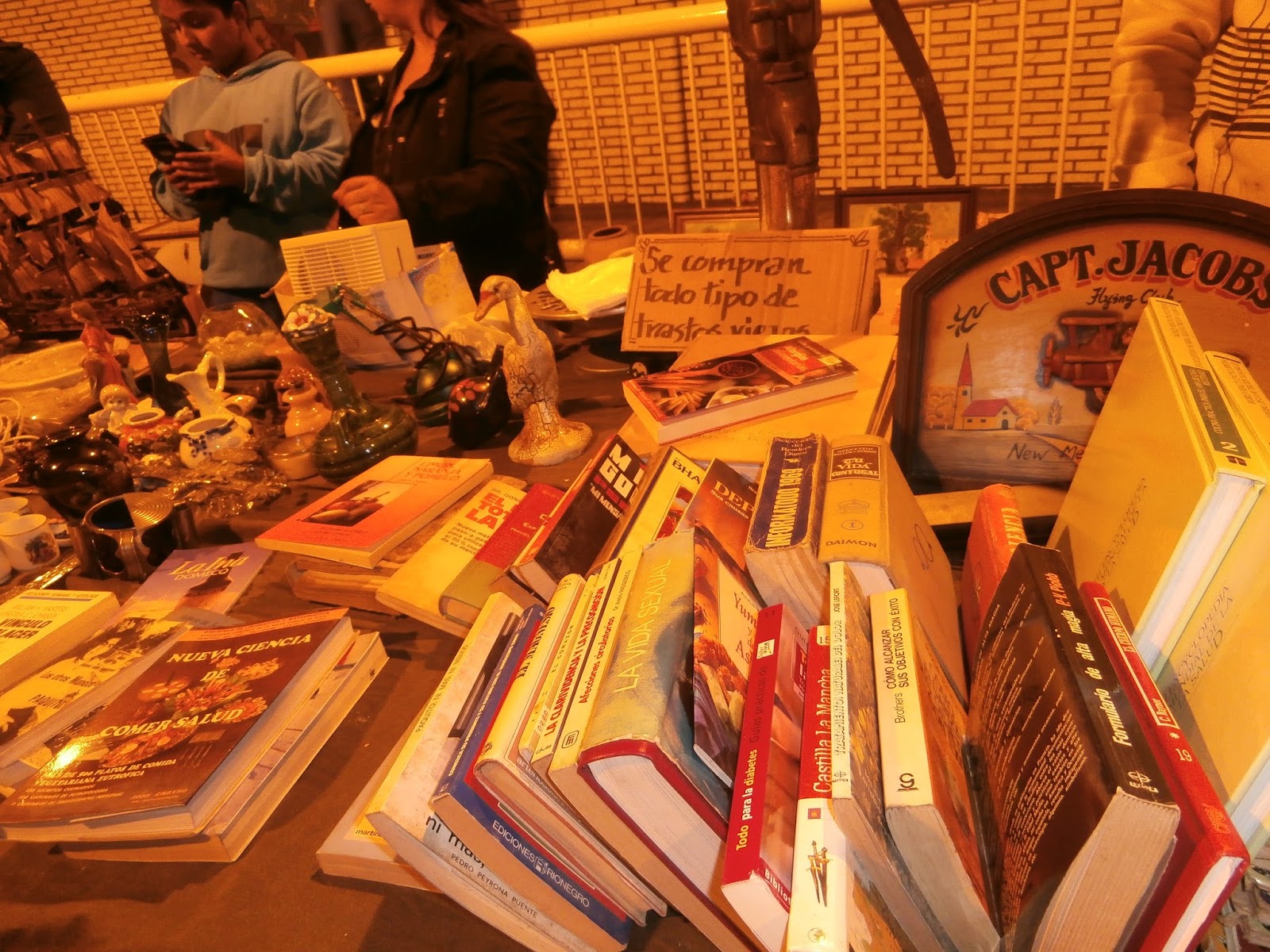
On Sundays visit the extensive (and cheap) flea market,  in the tunnel near the bus station that's  packed with traffic for the rest of the week.


Next year (2015) Santander will host an international yacht race competition. If you're lucky enough to be there in October you can catch a performance of  'Los Miserables' (sic) 

 The Ayumiento, (town hall) Correos (main post office) and  Cathedral have an understated charm that seems to sum up the mood of the city. Despite all the expensive shops with 'liquidacion' signs in the window, the citizens have a quietly stoical air about them.
 
If you fail to spot the pavement plaques indicating directions to the ancient Camino of Santiago, you won't miss the splendid triumphal archway of the Santander bank head office facing the sea,  surmounted by a  Spanish flag (at the top of this post).
 
 The best things about Santander?
  • cheap, reliable buses
  • clean streets
  • a peaceful ambience
  • 3-course menus del dia at 9-10 euros includes bread and half a bottle of wine per person
  • Lots of pedestrian crossings with illuminated displays and a countdown to show when to walk or how long to wait.
  • the airport is only a fifteen minute ride away from the main bus station.
  • With only one plane an hour on the day we left, it must be one of the world's calmest.


And the downside? 
  • the weather
  •  Not a single cinema , although the tourist office man said one was 'under construction'. 
  • A dearth of public swimming pools. The only one that wasn't for private members demand you ring in advance to book and they charge 8 Euros for an adult swim.
  • The demographic weighted towards the elderly, so it can seem a bit staid.
  • No nightlife after about 10pm, when the tapas bars close.
  • Nothing that I'd call a park.   
For such a flat place, there were very few bikes, although I spotted a Boris-style parking dock along the marina. So it was a pleasant change not to be plagued  by wheels whizzing along pavements or alongside traffic. There was a path marked out for them along the maritime walkway.

We stayed at Estudios Aranzazu, in a side alley off one of the main streets, basic but clean,  and flew Ryanair from Stansted.  'Ugh!' was the normal reaction when I told people, but the flights, one hour and forty minutes were comfortable and  cost only £170 return for the two of us, including reserved seats on the aircraft. The coach fare from Victoria to Stansted was £18 each, return.  We took only cabin bags, and paid less than 3 euros each for a bus to the centre. A taxi to  Estudios Aranzazu cost 4 euros but we walked to the bus station coming back -about 15-20 minutes. The accommodation cost less than £300 for two people.

I spent  relaxing week reading and walking an  getting to know a different city, at a bargain price . It made me really appreciate London's cultural amenities -although the weather here's  even worse!

Sunday, August 18, 2013

Not as silly as it seems: 'The Ladykillers' by Graham Linehan and Sean Foley at Vaudeville Theatre


The play I saw at the Vaudeville last week is a revival of the classic 1955 Ealing comedy directed by Alexander Mackendrick. That it all seemed a bit lacklustre was not for want of any acting ability by the cast, although it didn’t help that my friend and I had seats in the back row of the stalls. Some of the dialogue was lost.  

The idea for the film screenplay came to William Rose in a dream: five criminals, intent on seizing money from a delivery van at Kings Cross, plan the heist in a house near the station.  A sweet old widow called Mrs Wiberforce rents rooms to the leader, Marcus, who poses as a Professor of music and leader of a string quintet. The heist is to be planned under cover of ‘rehearsals’ with the old lady as an accessory to the crime, although she doesn’t know it.

Adding to the comedy is a noisy parrot called General Gordon, an  incompetent and ill-assorted gang and Mrs Wiberforce's tea-drinking cronies, all keen to hear the group’s rendering of Boccherini minuets -  really a decoy gramophone that disguises the gang’s plotting.  


Michael Taylor’s set is superb – a tumble-down, bomb-damaged house like a shambolic cuckoo clock, all parts jiggling when a train clanks into Kings Cross.

Less successful is the robbery, depicted on a board with moving lights to show the van intercepted and the getaway cars. A trunk full of money at the station is to be collected by Mrs Wilberforce, on behalf of her lodger. In the film with the advantage of a high point-of-view shot as the professor watches from a bridge, it’s much clearer.

Angela Thorne makes a perfectly credible naval officer’s widow, but she’s wasted in a role cut short because so many of the original film scenes are missing. A series of running gags, such as the old lady constantly standing on the Professor’s long scarf and a pivoting blackboard that always catches a gang-member a blow, become tedious with repetition.
 

What the play lacks most is the location shooting around the King’s Cross area. Much of the film’s charm is derived from the police station, the back streets and corner shops as well as the station itself. It’s as essential to the atmosphere as the iconic station in  another classic of British cinema, 'Brief Encounter'.
The film image of Alec Guinness and Herbert Lom on a bridge dangling a body by the ankles as they wait for trucks to pass underneath, the final drop swathed in steam, is unforgettable. The robbery scene with head-scratching porter and  out-of-order telephone box, plus the final coup-de-grace delivered by a falling signal, are delights the stage version fails to match. Someone I spoke to about the film remembered Frankie Howerd's cameo as an exasperated street stall owner.


As the actors took their bows, my companion said the show was ‘delightfully silly’ and I more or less agreed, until I read the director’s programme notes:
‘the Major, a conman, is a caricature of Britain’s decadent and ineffectual ruling class, One-Round is representative of the used, brutalised masses, Harry is the worthless younger generation, Louis the dangerously unassimilated foreigner, and Marcus embodies the collapse of moral and intellectual leadership.’
Given the widely diffused irony and social comment in British films of the era – continued in TV series like ‘Dad’s Army’ – it’s a shame the stage play didn’t bring this out.

Sunday, July 21, 2013

Fixing the Fluffs: 'With Great Pleasure' at the BBC Radio Theatre


Since my days  of acting in and directing  ‘amdram’ plays,  I’ve been fascinated by the backstage process, and I’d applied a few times to attend recording sessions at the BBC Radio Theatre. At last I succeeded in gaining  tickets to two programmes in the ‘With Great Pleasure’ series, recorded on July 7th.  
 

Maybe the  fact that the Wimbledon Men’s Final was played on that day played helped  my luck with  the ticket allocation. Although we arrived a half hour early, the café ‘holding’ area was packed and  our tickets were numbered 2003 and 2004. We were among the last to be called and just about managed to squash into gallery seats.

 
Celebrities in turn select favourite pieces of poetry and prose, interspersed  with reminiscence about their own careers. Hannah Gordon was first – a  tiny  Scotswoman I remembered from ‘Watercolour Challenge’, a programme I was addicted to when it first aired. Contestants painted scenes in UK beauty spots for five afternoons, overseen by Gordon, and on the Friday an expert awarded a prize of a box of paints.

The chosen poems, and details of Gordon’s experience at a dour boarding school, were delivered in her characteristically gentle style, although the opening poem, ‘Albert and the Lion’, read by Michael Pennington, needed a more robust sense of humour.
 
Each celebrity is accompanied by  two readers, which  in Gordon’s case were Pennington and  Eleanor Bron. Their  voices admirably suited poems, by Wendy Cope, Noel Coward and  Siegfried Sassoon. Gordon herself read a charming anecdote from Willy Russell’s ‘Shirley Valentine’, called ‘Nativity Play’.
 
 
 Lenny Henry proved more immediately topical, not least to me because I saw him play the lead in a 1950s American play called  ‘Fences’ just the other week (see below). As well as performing a speech from that play, he called on Nadine Marshall to read from Andrea Levy’s ‘Small Island’ - Hortense’s shock when she arrives from Jamaica and sees the tiny room in a run-down lodging house that is to be her home. 'Hortense's story is my mother's story', said Henry.


Extracts from Neil Gaiman’s ‘Anansi Boys’, Dickens ‘Dombey and Son’ and  Shakespeare’s  ‘Othello’  were all well received, as was  Jude Adekediki reading  an extract from Nigerian novelist Chinua Achebe’s ‘Things Fall Apart’.


I like the strong contrast between the two sets of extracts  and the presenters –one subtle, heart-warming and gently humorous, the other more vividly dramatic, and more political.

 
I listened to the first of the series last Monday afternoon,- Lenny Henry's programme -  and enjoyed it as much at the second hearing.
 
What you don't get from the broadcast performance, though are the ‘fluffs’ -the bits that have to be re-recorded because the actors have stumbled over their words. Efficient female producer Mary Ward Lowery,  took notes and made the cast repeat their lines - remarkably few of them in fact, although I felt sorry for the young actor who struggled with Achebe's convoluted prose style. At a stroke the seemingly confident  performers who, moments before, commanded  the stage, became schoolchildren  forced to repeat lines until they got  them right.
 
 'It sounds a bit flat,' remarked Hannah Gordon about one of her repeats . The producers's reply was brisk:  'Well, liven it up then!'.  I thought this was one of the most enjoyable afternoons of the year so far.
 

Tuesday, July 09, 2013

'Fences' at the Duchess Theatre


We've been spoiled with serious American dramas in London recently. Works by Arthur Miller, Clifford Odetts and Tennessee Williams all prod the underbelly of the American Dream.  They give more to chew on than the usual tourist-pleasing  musicals.

Pulitzer Prize-winner August Wilson's name is less well known. He  wrote a cycle of plays that set out to explore over ten decades the experience of people who lived in an area of  Pittsburgh where he was brought up. It's  a perfect vehicle for our home-grown Lenny Henry, fresh from his triumph as Othello.

 
The run-down Hill District of Pittsburgh in 1957 is  a predominantly black area. Lenny Henry plays paterfamilias Troy, first seen in overalls as he brings home his Friday wage-packet from his job as a garbage-collector. His workmate  Bono (Colin McFarlane) and he take turns at a gin bottle in a brown paper bag as they relax around the verandah of Troy's house.  Troy clearly out-swigs Bono but his mainstay is his strong-minded wife, Rose (Tanya Moodie).  
 
We learn from the admiring Bono that Troy's early promise as a baseball player was cut short by the prevailing racist attitudes of the era.  However, Troy as a home owner enjoys a measure of status and independence ; the house was bought from the compensation money for his brother's war injuries.
 
When Troy's son Cory (Ashley Zhangaztha)  seems to have inherited his father's aptitude for baseball, we might expect Troy to encourage him. The opposite is true. The tension between talented son and resentful father provides much of the drama in the first half of the play. Troy is  a man determined to enjoy his life despite the odds stacked against him. He doesn't shrink from  the price of  an alternative kind freedom, which adds to an already complex character. As he  alienates  his wife and son, as well as most of the neighbourhood, he becomes a tragic figure.
 
It's rare to see an audience so united in a standing ovation, rarer still that  I'm prompted to join them.  Be warned that the second half, although challenging, has a beautifully rendered scene  that will have you dabbing your eyes all the way down the Strand.
 

Friday, July 05, 2013

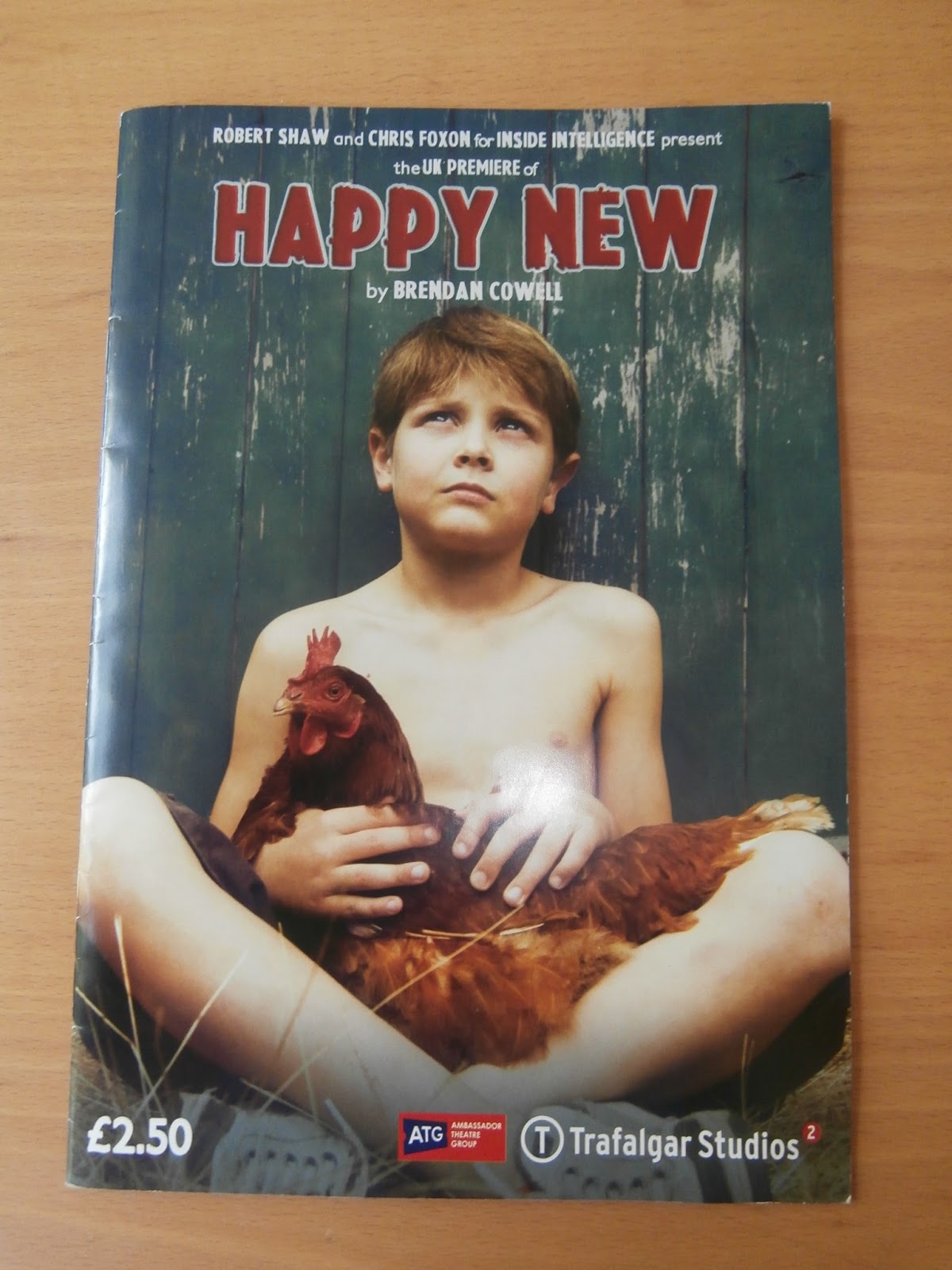
A Play of One Half: Happy New at Trafalgar Studios 2

 
A theatre scheme that offers bargains on unsold tickets is bound to result in a few disappointments. It's surprising , though, how few there are, and I've seen some  superb plays, usually on weekday matinees or Monday nights. Short notice is a major feature.

So when I saw only half of  'Happy New' because I couldn't face  going back after the interval it was a rarity

I was sorry  because the acting was terrific, with Joel Samuels and William Troughton playing  Lyle and Danny, brothers who shared a childhood of traumatic neglect. This has forged a close bond but Lyle is left as  perpetual caretaker to the damaged Danny,  who is unable to leave the flat they share. He is incarcerated by his obsessions and given to strange outbursts.

An intriguing, fairly low key start seems promising: two young men in shorts lie on beds, their faces covered in cream and sliced cucumbers. Their history as brothers and fellow-sufferers in an Australian setting is established. As part of an annual ceremony they concoct  a weird 'punch' with ingredients that   include a bottle of household cleaner  and a pot of paint.

With the arrival of Lyle's feisty girlfriend  Pru, played at full throttle by Lisa Dillon,  to announce that she can no longer tolerate the situation, the play goes into  chaos mode. The  script comprises convoluted monologues delivered loud and fast.

This is a rare failure for the author; according to the programme notes, Australian Brendan Cowell has won lots of awards and seen his plays performed in Sydney, Auckland and Berlin. Director Robert Shaw founded the company Inside Intelligence and has a wealth of experience.


The play has a harrowing theme ; in the first half it depicts a  completely shocking event which seems worse because it's unexpected.  In my opinion, the  Trafalgar Studio 2 in Whitehall, a superbly designed small theatre, did this play no favours. The action was literally in-your-face to an extent that I've only experienced once before, at a play called 'The Island' by South African author Athol Fugard, in the 1970s. I  about two feet away from a naked actor washing himself with water from a bucket. Staged in a tiny theatre in Croydon, it doused me almost as thoroughly as the character in the play.

A comparable shock value  play  was  'Life Price' that I saw at the Royal Court in the late sixties. It involves a sadistic street gang whose crime was so horrible it closed after two weeks. Tickets were  free during that time. A cheap-skate even then, I attended with my local amdram group and we toughed it out.

I soon shook off the Croydon experience, and I'd  have forgotten 'Life Price' if I hadn't written into a  semi-autobiographical novel.

Fortunately, I've seen a couple of excellent cut-price plays since 'Happy New', that  I'll be happy to write about soon.

Tuesday, June 25, 2013

Writing in the Pool: Glass Mill Leisure Centre at Loampit Vale, Lewisham

The new Glass Mill Leisure Centre is splendid and it takes only seven minutes to walk there from where I live. It's on the other side of Lewisham station. The distinctive coloured glass tiles make me think the designer must be Spanish. It's a kind of triumph of hope over expectation, too, because Loampit Vale, the main traffic artery between Lewisham and New Cross, must be one of the most grimy thoroughfares in London.

Someone told me the other day that they found swimming too boring, but that's part of its attraction for me when I'm writing.

In my opinion it's the perfect form of exercise  for any writer.
Charles Dickens walked for miles all over London, often at night. I like walking, especially since I discovered the Waterlink Way,  but it's often too distracting and not something for after dark. When I worked in China, where it was -25C for three months in Winter, the company had a mini-gym with a treadmill. But I frequently fell off it because you had to concentrate to keep at the right pace.

Swimming activates  the brain in the same way as walking but you don't have to worry about the weather or where you put your feet. I can just think about the story I'm writing or work out a new plot as I go back and forth. Afterwards I sit in the café for a while and study some magazines. On my first visit to the new pool  I bought food and drink but now I take my own sandwich, as I used to at the Ladywell baths.
 
 It can be inspiring, too. Often,  I like to swim with my head up to see what's happening. There was a mad woman in the first week who jumped in but couldn't swim and the attendant shouted to  her to grab the end of  a pole. Last year at another pool my husband, who favours a back-crawl, bumped into a poor swimmer. The  attendant set off an alarm to clear  the pool. Maybe it's a  coincidence, but  the first short story I sold to a magazine was set in a swimming baths. It was about a young man's first day as a trainee instructor and was titled 'In at the Deep End'!
 

Tuesday, June 18, 2013

A Woman of Words: El Diccionario by Manuel Calzada Perez at Greenwood Theatre, Weston Street


I always like going to a new fringe theatre, especially one that’s easy to get to. The Greenwood Theatre is a five minute walk from London Bridge Station, off St Thomas Street. It was rare opportunity to see a play in Spanish -  the notice  relayed via the Cervantes Institute mailing list.


As the lecture theatre slowly filled, it was a treat for me to hear Spanish being spoken all around me.
'Language is no longer a communication link between people and words are too generalized and vague'. So argues Manuel Calzada  Perez in his play  'El Diccionario' (The Power of Words), through the mouth of his protagonist, Maria Moliner. In 1972 she is  living in Valencia, and her grown up children have left home; she and her  ex-professor husband are about to enjoy their retirement.


Unfortunately, Maria is losing her memory; at the beginning of the play she has her  first meeting  with a consultant.  The diagnosis is cerebral arteriosclerosis.

This moving portrait of a woman in the first stages of dementia raises wider questions about language, survival and loss. In flashback we slowly learn about her marriage and children and how her experience relates to contemporary political rhetoric.


Vicky Pena  conveys the ironic modesty which hides the intelligence of a Republic supporter and survivor of  Franco’s dictatorship, with its purges and distortions. Maria even compiled a dictionary of Spanish usage to express the complexity of human responses, and is up for an award by the Spanish Royal Academy of Language - the first woman ever to be nominated.   
It's a comic as well as a tragic play.  Maria and her husband's affectionate relationship   is conveyed in humorous exchanges.The audience laughed with delight as the plodding consultant is obliged to tear up his notes on  Maria's 'delusion', when   she produces the heavy volumes that prove her achievement.
The author writes : ‘Maria Moliner is one of the most impressive and unknown personalities of the 20th Century Spain: an intellectual determined to create a better world. This play shows that this woman also made the most difficult decision: she chose to be free.’
It's rare enough to see a play in London that's presented in the original Spanish (with sur-titles) by a company with the talents of Teatro de La Abadia  under director  Jose Carlos Plaza, who presented the play in Madrid in 2012.  I hope there'll be many more like this.
 

Friday, June 14, 2013

Marital Mayhem: Peter Nichols, 'Passion Play' at the Duke of York's Theatre


Zoe Wanamaker plays Eleanor, part-time music coach and chorister, happy married to art-restorer James (Owen Teale). Their 25 year relationship is disrupted by ‘good-time-girl’ and recently widowed Kate (Annabel Scholey) who had previously lured a husband away from Eleanor’s best friend Agnes (Sian Thomas).
What begins as a bedroom farce, punctuated by loud and sprightly rhythms, gradually darkens, to an accompaniment by Bach.
 

The appearance of ‘alter egos’ for Eleanor and James (Samantha Bond and Oliver Cotton) was dramatically effective and very funny. I thought the religious theme at the end, embodied in paintings James brings onstage, seemed both tacky and tacked on. I also detected more than a hint of misogyny in the portrayal of the women, which added to a general sense of unease.
 Strong performances came from Zoe Wanamaker and Samantha Bond in identical orange fright-wigs


Another source of unease was the cramped seats, restricted leg-room and inadequate rake. We were in ‘good’ seats in the centre stalls, but maybe this is to be expected in an otherwise impressively ‘traditional’ theatre, given that it was built in 1895. I suspect they’ve added some rows, as it’s not very large. Its main virtue is the location in St Martin’s Lane, five minutes’ walk from Charing Cross.

The programme  was is good  value at £4 ; in addition to a potted history of the theatre it has an interview with the playwright and  an  interesting overview of plays about adultery by Mark Lawson. He writes: ‘Nichols ‘Passion Play’ is part of an eternal triangle of great adultery plays written around the turn of the 80s, sandwiched on either side by Harold Pinter’s ‘Betrayal’ (1978) and Tom Stoppard’s ‘The Real Thing’ (1982)
Peter Nichols is best known for ‘A Day in the Life of Joe Egg’ and ‘Privates on Parade’ (1977), both rooted in the author’s own experience, as is this one.


Thursday, June 13, 2013

Post Office Dramas

 
I was pleased when the  Lewisham Post Office changed location. Instead of the dingy purpose-built premises in the High Street it's now in WH Smiths in the shopping centre.
 
A friend who drove a mini-cab for a while after he retired from BT told us how much he hated dropping customers at the old post-office, which had one entrance in the High Street and a back entrance on the one-way system. Sometimes people would leap from the cab as soon as he stopped and dash through the post-office to avoid paying the fare.
 
It's usually much busier than this photo shows, but with all those magazine to read now waiting's  almost a pleasure. I can also check the women's magazine racks on my way out, too.  I've recently started writing for them again. The response time was appalling, but a sudden success revived my interest.
 
There's usually a lot going on - people chatting on mobiles in the queue and mothers scolding their kids for whizzing the display racks of travel accessories and cards.
 
My favourite counter number is 10, because the approach  is through a box-like structure that reminds me of a passport photo booth.
 
The usual purpose of my visit is to post a short story manuscript.  'Do you want someone to sign for it?' ask the assistant, and no, I don't, because I know it doubles the postage charge.  On the other hand, because  magazine editors taking six months, or even longer,  to respond, it's Hobson's. 
 
At least  the extra charge entitles me to a ticket that lets me  track the envelope. So I know when it reaches the magazine offices. Then I have some idea of when to remind the editor that I'm still waiting for a decision.
 
It also influences the choice of envelopes. I used to send the manuscript in stiffened A4 envelopes that were quite expensive because the floppy ones seemed vulnerable to mishandling. Now I figure that if a signature has to be obtained at least the envelope will be looked after, so a non-stiffened one will suit.
 
I used to enclose an A4 envelope with the same amount of postage, minus the signing fee. At last Friday's workshop I learned that it was OK to ask the editor to dispose of a reject and to  enclose an ordinary SAE with a second class stamp for the decision notice.  

Wednesday, June 12, 2013

Chick-lit Authors at the Shooting Star


Writing bestselling fiction: meet the authors, an agent + Q&A  

·        Tuesday 11.6.2013 at The Shooting Star, Middlesex Street 

Join us for a evening all about writing and publishing where you'll hear from authors Katy Regan and Ali Harris on their experience of writing and getting published, also joining us for this special event will be literary agent, Kate Burke. 

Guests: Katy Regon author of How We Met

Ali Harris, author of The First Last Kiss

 Kate Burke, literary agent, Diane Banks Associates Literary &Talent Agency 

Kate Burke is a literary agent at Diane Banks Associates, a hugely successful agency which handles literary, TV and film rights for clients and negotiates deals for writers internationally. Before becoming an agent, Kate spent ten years as a fiction publisher at Penguin, HarperCollins and Random House, where she signed up many women’s fiction, historical and crime and thrillers writers and turned them into bestsellers.

We'll follow the talks with a Q&A session so do come along if you're writing, or thinking of, stories within this genre.


 A couple of years back  I found out about  a writing group that meets fortnightly  in the basement of  pub called The Shooting Star in a street opposite Liverpool Street Station. It has a mixed-age multicultural membership but most are in the mid-20s to mid 30s range, I'd say. Mainly business people, they take their writing seriously. It costs £5 to attend the normal sessions and the reading slots fill up quickly.
 

I don't go very often but  I'm on the meet-up list and I go to special events like the one above. There are bout 15-20 people at an ordinary session.
 

Also, it costs £5, although you don't have to buy a drink at the pub upstairs . I try to go when they have special events, such as the session on techniques of reading your work aloud that took place a couple of weeks back. Lisa the organiser is efficient and very welcoming.


At last night's event, chick-lit authors Ali Harris and Katy Regan told about their paths to publication. Both have backgrounds in upmarket magazine journalism  and described the transition to authorship as 'a roller-coaster ride.' 'I was on my knees with emotion,' said Harris. The rapid  delivery was hard to hear at times, although I was fairly near the front. 
 

Literary agent Kate Burke  was much calmer and described how she worked with writers. She handles 100 submissions a week from writers who have submitted the first three chapters of novels. I was surprised to hear that they often haven't written any more than this and it may take months or years before they are ready to be 'signed' to the agency.
Both authors  acknowledged the large amounts of editing input from agents as well as their support 'at the end of the telephone' through the traumas of the actual writing process. They authors recommended persistence.

Kate Burke, asked what stops her from taking on a writer, said she hated spelling mistakes and over-confidence, although she liked it if a writer mentioned authors who's had an influence. She hates writers who say, 'I don't read.'


Tuesday, June 11, 2013

Some more militant than others...From Soap Boxes to Tea Pots: a talk about Suffragettes at the Museum of London


I was pleased when a friend suggested we go  to a Gresham College talk at the Museum of London on Monday.  ‘From Soap Boxes to Tea Sets: How the Suffragette Movement got into People’s Hearts and Homes’ sounded interesting.
 

Antonia Byatt, first woman director of the Women's Library,  focused on how the suffragettes publicised their cause. In the absence of Facebook and Twitter, not to mention radio and TV, addressing rallies and marching with banners was a no-choice option for the suffragettes. Chaining themselves to railings , setting fire to politicians’ homes  and getting arrested was a way to keep the issue in newspaper headlines. When Emily Davison was killed on Derby Day in 1913 by throwing herself under the King’s horse it was the climax of an escalating campaign.


 With the outbreak of WW1 the government had other things to occupy them.  Women's contribution  to the national economy proved to be the most persuasive factors in their  eventual enfranchisement. It was good to be reminded, though, of a time when women did step outside their allotted social roles to fight for justice.

I’m inspired to go back to the museum soon to see their collection of materials and memorabilia.